

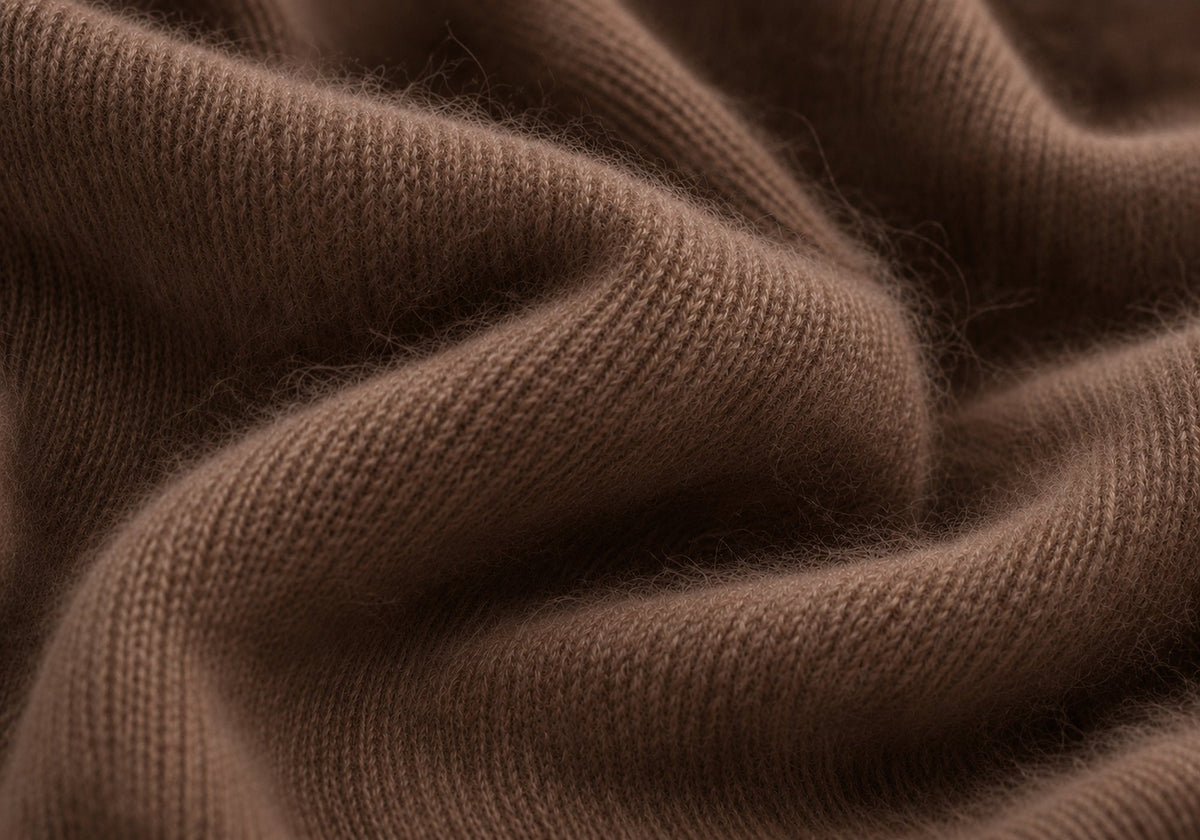
Why Pure Cashmere?
Some materials are chosen for how they look. Cashmere is remembered for how it feels. At The Cashmere Studio, we choose 100% cashmere for our collections: the fine natural fiber itself, not a cashmere blend. It is a simple commitment to a material whose softness, warmth and understated elegance need little embellishment.
What Is Cashmere?
Cashmere is a natural fiber gathered from the soft undercoat of cashmere goats. Beneath their coarser outer hair is a fine, insulating fleece that is carefully separated, cleaned and spun into yarn. Its delicate fibers give finished knitwear a distinctive combination of softness, warmth and lightness.
Cashmere is not a style of sweater or simply a way of describing something soft. It is a specific textile fiber. That distinction matters when you are choosing a piece intended to become part of your everyday wardrobe.
Why We Choose 100% Cashmere
Natural softness
The exceptionally fine fibers of cashmere create a gentle feel against the skin. Depending on the knit and finish, that softness can be airy and brushed or smooth and refined. We want the fabric itself to be at the center of the experience.
Warmth without unnecessary weight
Cashmere is prized for its insulating qualities. Its soft, lofty fibers help retain warmth while allowing many garments to remain remarkably light and comfortable. The warmth of an individual piece still depends on its thickness, knit and construction.
A timeless way to dress
A beautifully chosen cashmere crewneck, cardigan or scarf belongs in more than one season and more than one outfit. Layer it with tailoring, wear it with relaxed trousers or reach for it when you want everyday comfort to feel a little more considered.
100% Cashmere vs. Cashmere Blends
A garment described as a cashmere blend contains cashmere alongside another fiber, such as wool, cotton, silk or a synthetic material. Blends have legitimate purposes: they may change the look, drape, structure, performance or price of a garment.
100% cashmere, by contrast, tells you that the textile's fiber content is cashmere rather than a mixture. We choose pure cashmere because we value its characteristic hand feel and the clarity of knowing what the fabric is made from. This is a choice about the material, not a claim that every blend is unsuitable or that every pure-cashmere garment performs identically.
Does 100% Cashmere Automatically Mean Better Quality?
Not by itself. Fiber composition is an important starting point, but it is not a complete quality grade. The fineness and length of the fibers, the way the yarn is spun, the density of the knit and the finishing of a garment all influence how it feels, drapes and wears over time.
When choosing cashmere, look beyond the label. Consider whether the knit feels balanced, the seams are well finished, the shape suits your wardrobe and the garment has the weight and texture you want. A thoughtful purchase begins with both clear composition and careful construction.
How to Care for Pure Cashmere
A little care helps cashmere remain a favorite for seasons to come. Follow each garment's care label, air it between wears when appropriate, avoid excessive rubbing and store knitwear folded rather than hanging. Where the care instructions allow gentle washing, use cool water and dry the piece flat, away from direct heat.
Small pills can develop where fine fibers experience friction, particularly around cuffs and underarms. They do not automatically mean a piece is poor quality; remove them gently with an appropriate cashmere comb. For more guidance, read our cashmere care guide.
Frequently Asked Questions
What does 100% cashmere mean?
It means the cashmere textile is made from cashmere fiber rather than a blend of cashmere and other fibers. Always check the individual product's composition and care information for details.
Is pure cashmere warm enough for winter?
Cashmere is naturally insulating, but warmth depends on the garment's thickness, knit and how it is layered. Fine-gauge cashmere makes a versatile layer, while heavier styles offer more coverage and warmth.
Does 100% cashmere pill?
It can. Pilling is caused by friction and loose surface fibers; it varies with fiber quality, yarn and garment construction. Gentle care and occasional de-pilling help maintain a neat appearance.
Can cashmere be worn beyond winter?
Yes. Lightweight cashmere can be comfortable during cooler spring evenings, transitional weather and air-conditioned days. Choose the knit weight and layering that suit the temperature.
Discover Pure Cashmere
From refined everyday sweaters to cardigans, coordinated sets and small accessories, explore pieces chosen for the quiet pleasure of wearing pure cashmere.

