How to Tie a Cashmere Scarf: 10 Simple and Elegant Knots
The way you tie a scarf changes everything — the same cashmere piece can look relaxed and easy or sharp and deliberate, depending entirely on the knot or drape you choose. Yet many people stick with a single method because the alternatives seem fussy or complicated. They are not. The ten techniques in this guide range from effortless loops you can do in three seconds to more structured arrangements that make a cashmere scarf the centerpiece of your outfit. Each one works with different scarf dimensions, different necklines and different occasions — so you never feel limited to one look.
The Effortless Loop

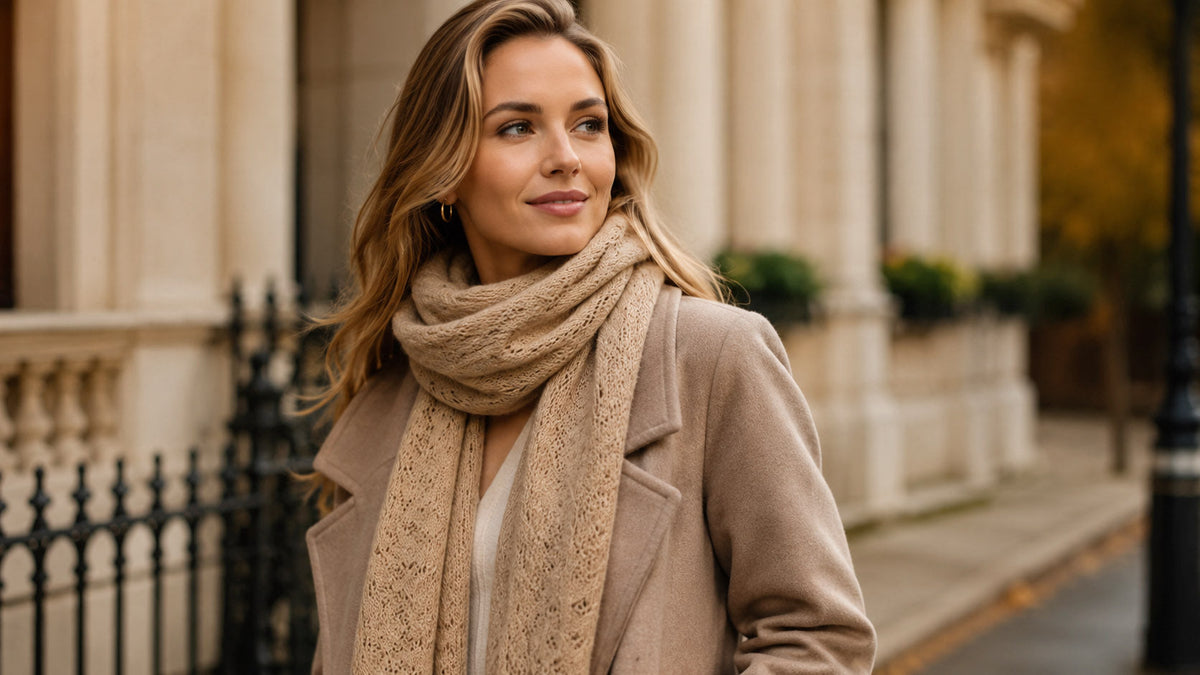
This is the method most people reach for instinctively — and for good reason. Drape the scarf around the back of your neck with both ends hanging in front, roughly even in length. Take one end and loop it once around your neck, letting the fabric fall naturally rather than pulling it tight. Adjust so the loop sits comfortably at the collarbone and both ends fall at slightly different lengths for a relaxed asymmetry.
The effortless loop works best with medium-length scarves — the Bryna or Ida woven scarves are ideal. It suits everything from a weekend coat to a blazer, and because it takes no more than a few seconds, it becomes the default for mornings when time is short but you still want to look intentionally put together. The key is looseness: a tight loop looks stiff, while a relaxed one looks like you have been doing this for years.
How Do You Stop a Cashmere Scarf from Slipping?
Cashmere is naturally smooth, which means certain knots hold better than others. The effortless loop stays in place because the crossed fabric creates gentle friction against itself. If your scarf still slides, tuck the front ends inside a coat or blazer — the fabric-to-fabric contact between cashmere and your outer layer keeps everything anchored. Avoid using clips or pins directly on the knit, as they can pull or snag the delicate fibers. If you prefer a completely hands-free approach, the pull-through method described below is the most secure option.
The Pull-Through Knot

Fold the scarf in half lengthwise, drape it around your neck so the folded loop sits on one side and the two loose ends on the other. Thread the loose ends through the loop and pull gently until the knot sits where you want it — typically just below the chin. This creates a compact, self-securing arrangement that stays in place all day without adjustment.
The pull-through is particularly effective in cold weather because it creates a dense, double layer of cashmere across the chest — exactly where warmth matters most. The Lyla pull-through scarf is designed specifically for this technique, with proportions that produce a neat, balanced knot every time. For a deeper look at how different weights and constructions affect warmth, our seasonal warmth guide explains what to expect across temperatures and layering combinations.
Which Knot Works Best for Cold Weather?
The pull-through and the double wrap (below) provide the most thermal coverage. Both create multiple layers of cashmere around the neck and upper chest, trapping air between the layers for natural insulation. The pull-through is more compact and works well under a coat collar; the double wrap is more generous and suits open-collared outerwear. Choose based on how structured you want the look — the pull-through is neater, the double wrap is more relaxed.
The European Drape

Fold the scarf in half lengthwise, drape it around your neck, and pull both ends through the loop at the same time — but instead of pulling them all the way through, leave about a third of the length hanging freely. The result is a structured cascade that sits close to the neck at the top and opens into a gentle fan shape across the chest.
This technique works beautifully with wider scarves and wraps — the Kennedy or Caenora, for instance — where the extra width creates a sculpted effect as the fabric fans outward. It is a naturally elegant arrangement that suits coats, blazers and evening wear alike. The European drape reads as polished without looking overdone, which is precisely the balance most people are looking for.
Can You Wear a Cashmere Scarf as a Shawl?
Yes — and it is one of the most versatile ways to wear a larger cashmere piece. Simply drape the scarf across both shoulders, letting the ends fall to mid-forearm or below. For a more secure fit, cross the ends once in front and tuck them behind your arms. The Odalys fringed shawl and the Kaia pashmina are both generous enough to cover the shoulders fully, creating a refined layering piece that works at dinners, weddings and cool-weather outdoor events. If you are exploring which scarf dimensions best suit shawl-style wearing, our sizing guide breaks down the relationship between width, length and draping versatility.
Five More Methods Worth Knowing
The single drape is the simplest of all: let the scarf hang over one shoulder without tying it. It works best with longer, narrower scarves and creates a clean vertical line that elongates the silhouette. The reverse drape wraps the scarf once around the neck and throws both ends behind the shoulders — a classic look with a coat that keeps the front of your outfit clean and uncluttered.
The infinity wrap ties the two ends of a long scarf together, then loops the resulting circle twice around the neck. It creates a cowl-like effect that stays in place without any adjustment and works particularly well with fine-knit or lace-knit scarves like the Alie, where the delicate pattern is visible through the layered loops. The tube scarves in the collection — the Imani and Josie — arrive as ready-made infinity loops, eliminating the tying step entirely.
The chest knot positions a simple overhand knot at the center of the chest rather than at the neck, letting the scarf frame the upper body like a long necklace. And the belted wrap drapes a wide scarf across the shoulders and secures it with a slim belt at the waist, transforming a scarf into a structured cape-like layer. If you are looking for complete outfit combinations to pair with these techniques, our styling guide covers fifteen looks from work to evening.
How Do You Tie a Wide Cashmere Scarf Without It Looking Bulky?

Width is an advantage, not a problem — the key is to fold before you drape. Take a wide scarf or wrap and fold it in half lengthwise, then fold again if needed until the width feels manageable. This creates a layered strip that ties as neatly as a narrow scarf while preserving the warmth and weight of the full piece. Once tied, you can gently pull the top layer open to reveal some of the width for a more relaxed effect, or leave it folded for a streamlined finish. Wide scarves look best in simple arrangements — the effortless loop or the single drape — rather than complex knots that create unnecessary bulk.
Finding Your Signature Knot
The best knot is the one you reach for without thinking — the one that feels as natural as putting on a coat. Start with two or three methods from this guide, practice them a few times, and you will quickly develop a repertoire that covers every occasion. A pull-through for cold mornings, a single drape for the office, a shawl wrap for dinner — three techniques that turn one scarf into three entirely different accessories. To find the scarf that suits your preferred methods, explore our cashmere scarf collection, where every piece is designed to drape, knot and flow as beautifully as it feels.