How to Wash a Cashmere Scarf Without Shrinking or Damaging It
Washing a cashmere scarf feels like a high-stakes operation — and it does not need to. The fiber is more resilient than its reputation suggests, and with the right method, you can wash your scarf at home as often as needed without shrinkage, felting or loss of softness. The key is understanding what cashmere responds to and what it cannot tolerate. This guide walks you through hand washing step by step, covers machine washing for those who prefer it, and explains exactly what to do if something goes wrong.
How Often Should You Wash a Cashmere Scarf?

Less often than you think. Cashmere is naturally odour-resistant — its fibers absorb and release moisture without trapping the bacteria that cause persistent smells. For most people, washing a scarf every five to seven wears is sufficient. Between washes, simply airing it overnight on a flat surface allows any absorbed moisture and scent to dissipate naturally.
Washing too frequently is one of the most common causes of premature wear in cashmere. Each wash cycle, no matter how gentle, creates friction between fibers — and over time, that friction loosens the yarn structure and encourages pilling. The goal is to wash when the scarf genuinely needs it — visible stains, absorbed odours that airing cannot remove, or a general loss of freshness — and to air it between wears as your default maintenance routine.
Can You Spot-Clean a Cashmere Scarf?
Yes, and for small stains it is often the better option. Dampen a clean white cloth with cool water and a tiny amount of gentle detergent, then blot the stain — never rub, as rubbing pushes the stain deeper and abrades the surface fibers. Work from the outer edge of the stain inward to prevent spreading. Once the stain lifts, blot with a damp cloth to remove the detergent, then press a dry towel against the area to absorb excess moisture. Lay flat to dry. This targeted approach cleans the affected area without subjecting the entire scarf to a full wash cycle.
Hand Washing: The Safest Method
Fill a clean basin or sink with cool water — never warmer than 30°C. Add a small amount of gentle detergent specifically designed for delicate fibers, or a mild baby shampoo. Avoid standard laundry detergent, which contains enzymes and optical brighteners that strip cashmere of its natural oils and can leave the fibers feeling dry and brittle.
Submerge the scarf fully and press it gently through the water — do not wring, twist or scrub. Let it soak for five to ten minutes, then drain the basin and refill with clean cool water. Press the scarf through the rinse water to remove all detergent residue, repeating once if needed. The rinse is important: leftover detergent attracts dirt and stiffens the fibers over time.
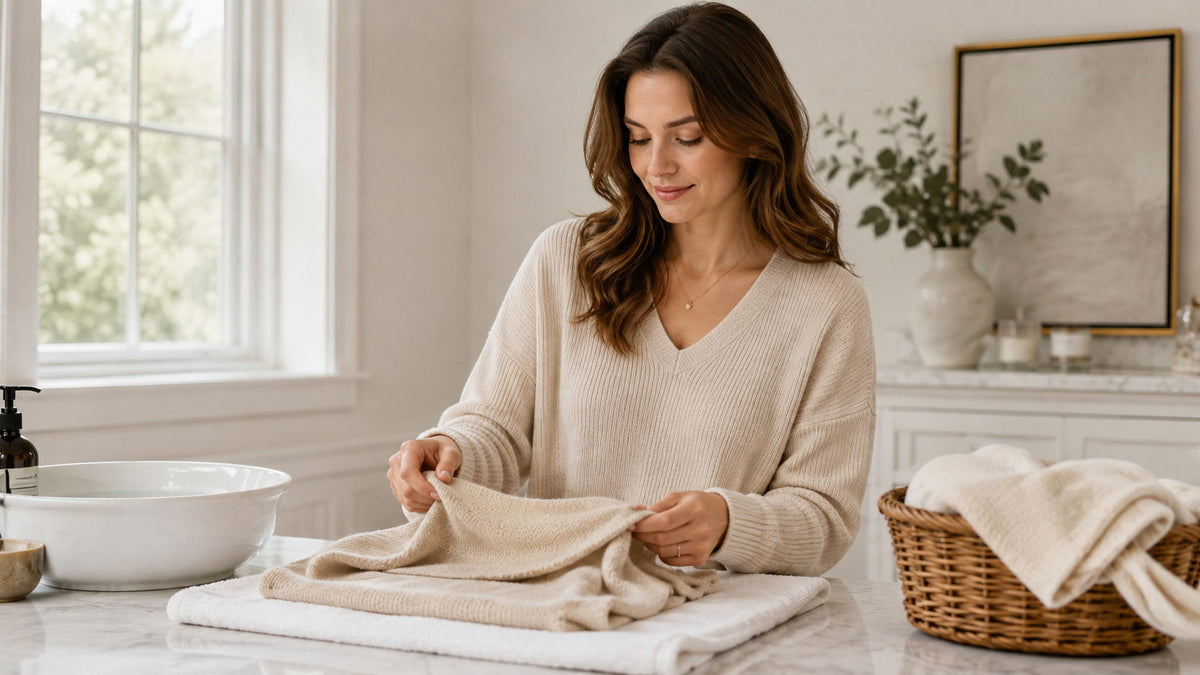
To remove excess water, lay the scarf on a clean, dry towel, roll the towel and scarf together, and press firmly along the length of the roll. This extracts water through absorption rather than wringing, which protects the yarn structure from stretching. Unroll, reshape the scarf gently with your hands, and lay it flat on a fresh dry towel or a mesh drying rack. Allow it to dry completely before wearing or storing — cashmere that is put away damp can develop mildew and musty odours. For guidance on assessing whether your scarf’s quality will hold up through repeated washing, our quality guide explains what construction details matter most.
What Detergent Is Best for Cashmere?
Look for a detergent labelled for delicates, wool or cashmere — these are formulated without harsh enzymes, bleach or optical brighteners. Baby shampoo is an excellent alternative: it is pH-neutral, gentle on protein fibers, and rinses cleanly. Avoid fabric softener entirely — it coats the fibers with a silicone layer that reduces breathability and can make the fabric feel greasy rather than soft. Cashmere produces its own softness; it does not need chemical help.
Can You Machine Wash a Cashmere Scarf?
Some cashmere scarves tolerate machine washing on a delicate or wool cycle at 30°C or below — but only if your machine offers a genuinely gentle cycle with low agitation and a slow spin. Place the scarf inside a mesh laundry bag to prevent it from catching on the drum or tangling with other items. Use the same gentle detergent you would for hand washing, and never use a standard spin cycle, which creates enough force to felt and shrink the fibers.
The risk with machine washing is inconsistency. Even gentle cycles vary between machines, and a cycle that works perfectly on one machine may be too aggressive on another. If you choose to machine wash, test with a scarf you are less attached to before trusting the cycle with your favourite piece. Hand washing remains the safest method and gives you complete control over temperature, agitation and rinsing.
What Happens If You Wash Cashmere in Hot Water?
Hot water causes cashmere fibers to contract and tangle — a process called felting. Once felted, the fibers lock together permanently, producing a thicker, stiffer fabric that is noticeably smaller than the original. Mild felting can sometimes be partially reversed by soaking the scarf in cool water with a small amount of hair conditioner, then gently stretching it back toward its original dimensions while it is still damp. Severe felting, however, is irreversible. The simplest prevention is to never use water above 30°C — a rule that applies equally to washing and rinsing.
Drying and Reshaping
Never hang a cashmere scarf to dry. The weight of the wet fabric stretches the fibers downward, distorting the shape and creating a scarf that hangs longer and narrower than it should. Always dry flat — on a clean towel, a mesh drying rack, or any surface that allows air to circulate beneath the fabric.
While the scarf is still damp, reshape it gently with your hands. Smooth out any creases, straighten the edges, and adjust the dimensions to match the scarf’s original proportions. Cashmere is naturally elastic when damp, which means this is your opportunity to correct any slight stretching or bunching that occurred during washing. Once dry, the fibers set in their new position, so take a moment to get the shape right before walking away.
A Scarf That Lasts When You Wash It Right

Washing cashmere at home is not difficult — it simply requires attention to temperature, gentleness and drying method. A scarf that is hand washed in cool water, pressed rather than wrung, and dried flat will maintain its softness, shape and colour for years. The five minutes you invest in washing it properly extend its life by seasons. To understand why some scarves hold up better than others through repeated washing, it comes down to fiber quality and construction — and for tips on preventing the most common post-wash issue, our pilling guide explains causes, prevention and safe removal. For seasonal storage between washes, our storage guide covers everything from folding to moth protection. And to explore scarves built to last, browse our cashmere scarf collection.